1.6. Interacting with the Real World#
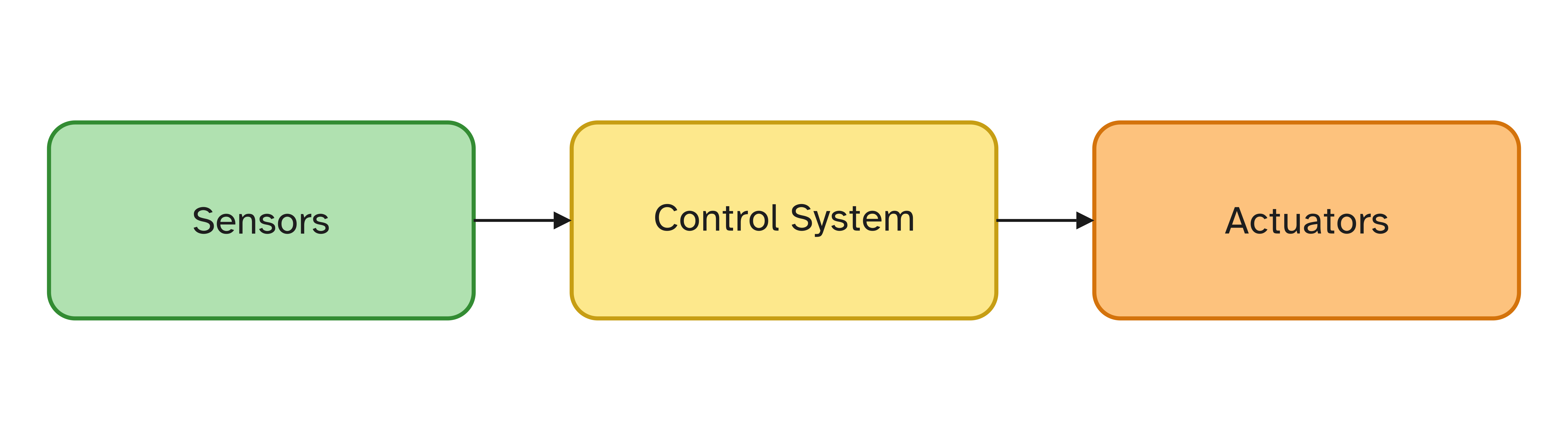
For a mechatronic device to respond to the real world, it usually combines three main components:
Sensors that measure inputs or conditions and turn them into data.
Actuators that create physical action.
A control system that decides when and how to command the actuators.
Some systems use feedback, where sensor readings are compared with a goal. Other systems are simpler and run for a fixed time or sequence.
User input, such as pressing a button or turning a dial, is another kind of input to the control system. These input devices can act like simple sensors because they detect the user’s actions and turn them into signals.
1.6.1. Example: Toaster#
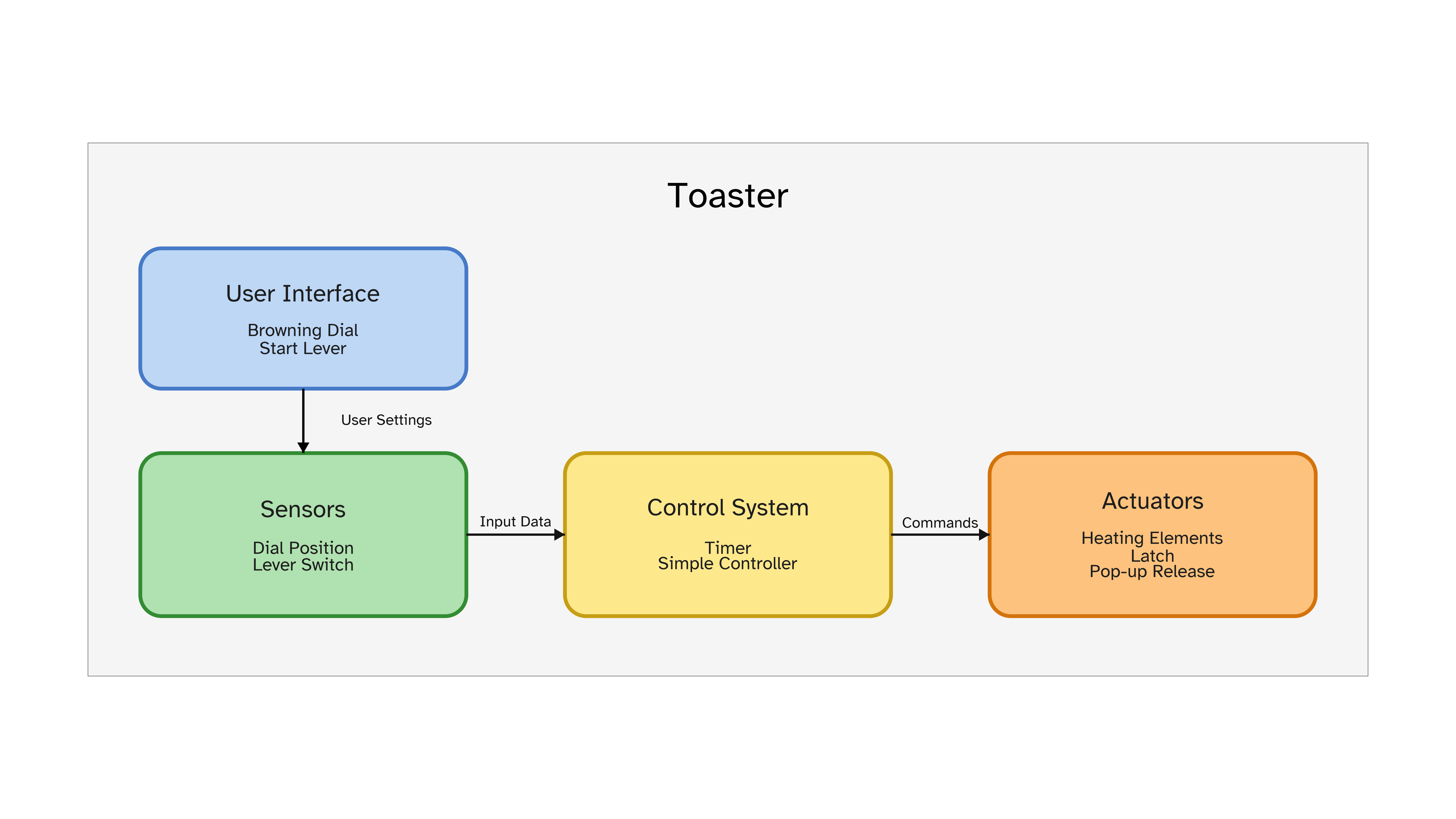
As an example, let’s consider each of the components in a toaster.
Inputs / Sensors
Browning dial sets the desired browning level.
Bread lever switch starts the cycle.
Actuators
Heating elements.
Spring-loaded pop-up mechanism.
Electromagnet or latch to hold the bread down.
Control System
A toaster uses a simple timer to control the amount of browning. When the user presses the lever down, the toaster energises the heating elements for a fixed amount of time. When the time is up, the latch releases and the toast pops up.
This is an example of an open-loop system because the toaster does not measure how brown the toast is. It simply runs for the time set by the browning dial.